 SOUTH HANNINGFIELD PARISH COUNCIL
History of Ramsden Heath
Ramsden Heath is the largest, by population (around 2,000), of the three wards that make up the parish of South Hanningfield, the others being Downham and South Hanningfield.
Originally Ramsden Heath and Ramsden Bellhouse were one single village stretching from Stock in the north to Nevendon in the south and was called Ramsden Bellhouse. The name Ramsden Heath applied only to an area of heathland to the north of the village. Around 1910 Homesteads Ltd built an estate centred around St. Mary’s church about a mile from the old village. This became known as Ramsden Bellhouse and the old village became Ramsden Heath. The railway divides the village into “up to the Heath” and “down to the Bellhouse”.
The original village centred around the crossroads of what are today Church Road and Heath Road, where the war memorial stands in Ramsden Heath. This was where the blacksmith’s and wheelwright’s shops were located (hence the name Farrier Square) with the mill and the parish workhouse being nearby in Mill Lane.
In 1086 the Domeseday Book indicates that the village belonged to the Bishop of London, with the name Belhus being added in around 1200 when the lands were given to Richard de Belhus. On the marriage of his grandson’s daughter to Nicholas Barrington there were two manors, Ramsden Belhus and Ramsden Barrington. The Barringtons owned a large house at the junction of Park Road and Park Lane and this may have been the Manor House at one time.
At the corner of Short Lane and Church Road in the area once known as Cox Green there was a moated mansion, hence the road names Manor Close and Moat Close.
The village mill, from which Mill Lane takes its name came to a dramatic end on November 22nd, 1873. At about midday the mill blew down with the miller still inside. He escaped with only bruises but it was the end of the mill.
In 1872, the church school was opened almost opposite the mill, and educated the local children for some fifty to sixty years. It was later converted into two houses, called `Eton’ and `Harrow; but has now made way for modern development. Reading Rooms were located next to the village school and in 1931 they became the YMCA Red Triangle Club and then the original village hall before the present one was built in 1999.
At the top of Mill Lane in what is now St. John’s Place used to be St. John’s church built in 1901, known as the tin church as it was made out of corrugated iron sheets.
Hilltop Nursery, on Dowsett Lane towards Chelmsford, was founded by Mr George Smith in the 1920’s. He came on holiday to Ramsden Heath and was so taken by the place that he relocated his business here from Leytonstone.
Ramsden Hall, now the Ramsden Hall Academy, a specialist residential school on the road towards Billericay, was the birthplace of Sir Francis Thomas Bacon in 1904. He pioneered work on the hydrogen-oxygen fuel cell which was eventually used to provide electrical power for the Apollo moonshot, providing electricity for the functioning of systems and the production of drinking water. Bacon’s pioneering work may be considered essential to the Apollo programme.
The Hall was taken over by the military during World War Two, during which time an incendiary bomb landed down the chimney of the billiard room. The room was full of furniture which had been cleared from the rest of the Hall when the Army was billeted there, and it was locked and sealed. The bomb came down the chimney, which was quite a large one, and fortunately burned itself out in the grate.
What is now Dovedale Close used to be a field where animals were kept before being taken to the slaughterhouse, which used to be where Willowmeade now is.
What is today Pete’s Place café was the village shop and Post Office, before becoming a swimming pool supplies shop and now a café. It is said that it is built over a well which is why the steps are built up the way they are.
Today Ramsden Heath is home to a well-regarded primary school and preschool, a modern village hall, some thriving allotments, an award winning (Nursery) sports field, tennis club, children’s playground, and two pubs/restaurants and many, many horses.
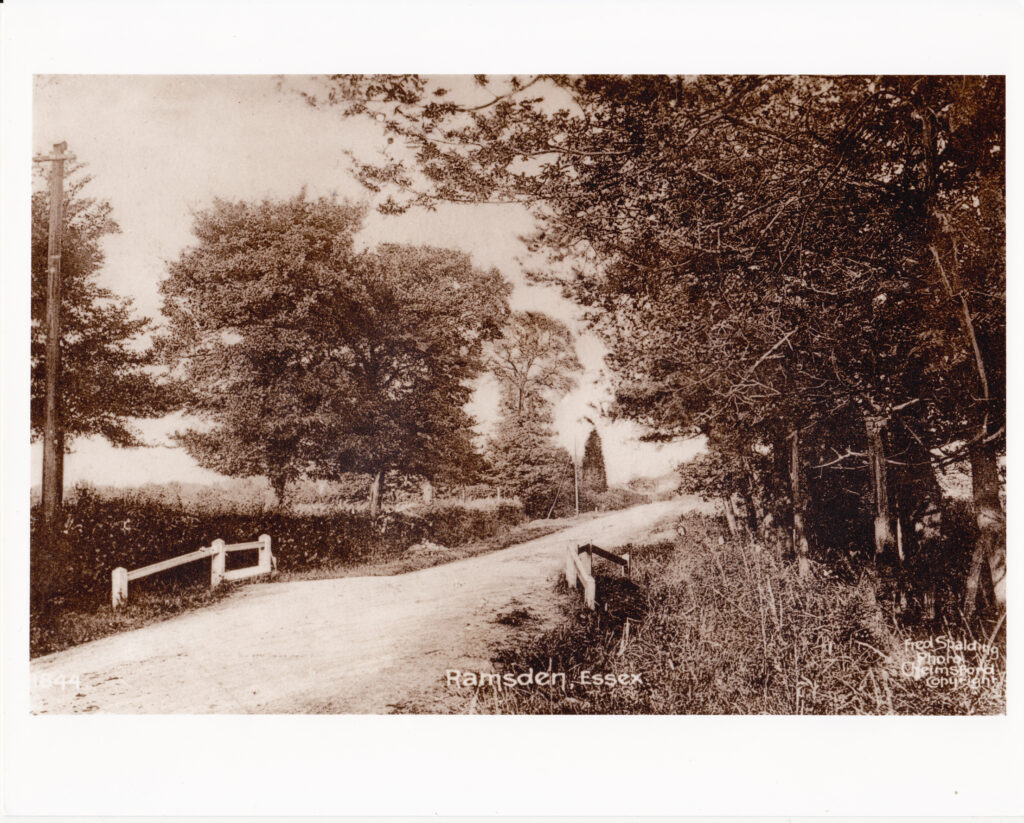


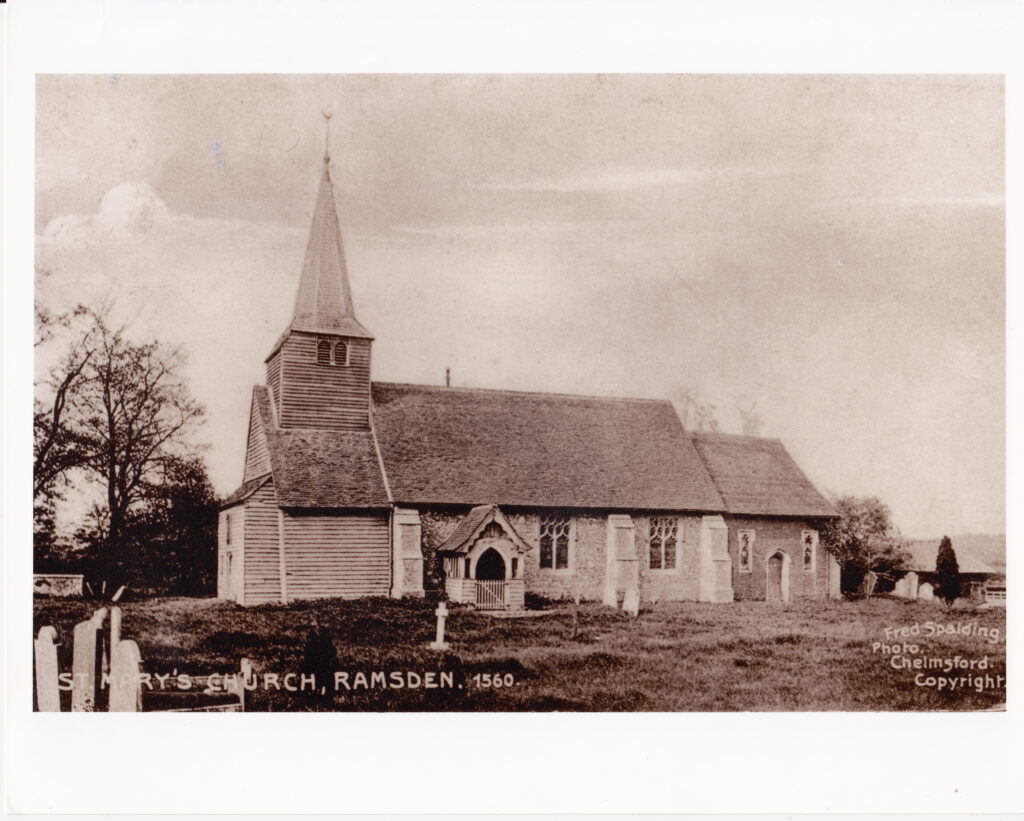


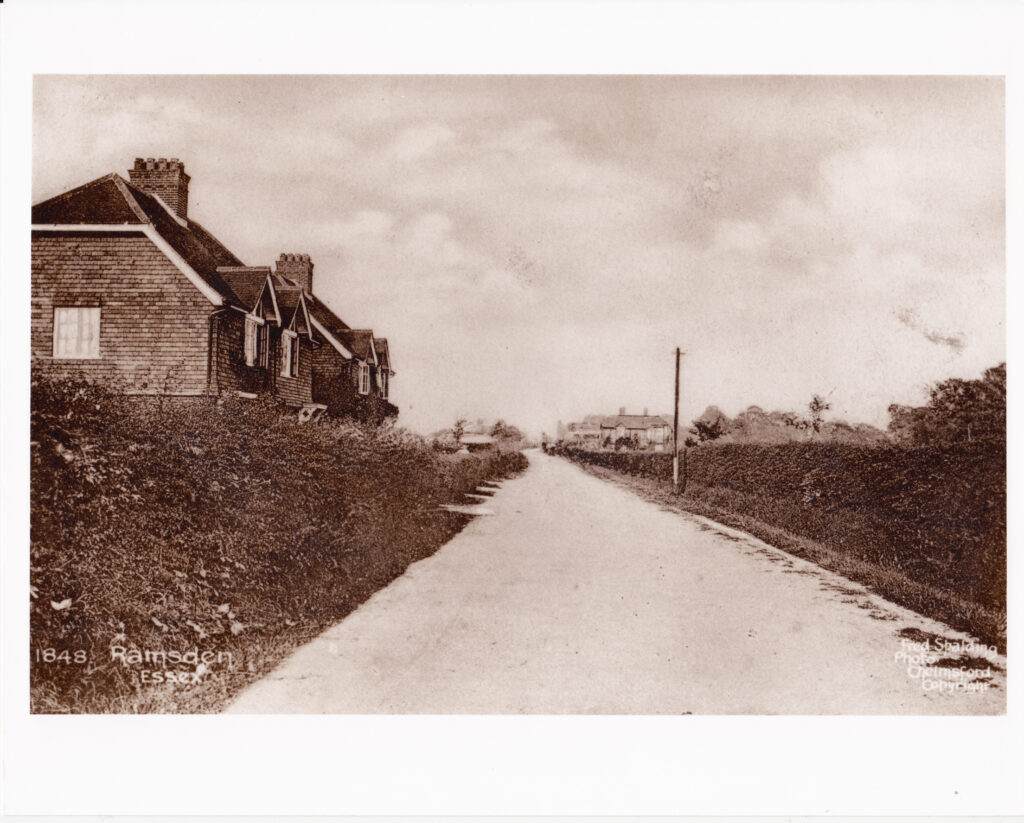
Sourced from Ramsden Heath & Downham History on Flickr. Pictures taken by Fred Spalding, a Chelmsford photographer around 1920.


